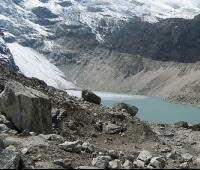
Climate Change and Glacial Lake Outburst Floods
Issue:Climate change
The Woodrow Wilson International Center for Scholars has published an article highlighting the uncertainty attached to predicting the effects of climate change. Focusing on the phenomena of glacial lakes in Nepal and Peru, it begins to explore the extreme complexity that characterises the relationship between climate change and other drivers of instability, as well as what is required to manage the risk with the help of local communities.
Article Source: New Security Beat
Image Source: Oxfam International
Read more »Posted on 23/11/11
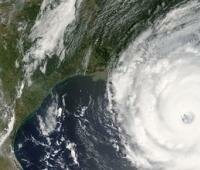
Risk of extreme weather events highlighted by the Intergovernmental Panel on Climate Change
Issue:Climate change
As reported by Agence France Presse, the UN Intergovernmental Panel on Climate Change has produced a draft summary of a report that warns of a predicted increase in the number and intensity of extreme weather events. The 800-page report goes some way to addressing a subject largely untouched by their landmark 2007 report on climate change, and adds to the growing body of evidence outlining the potential security implications of a warmer planet.
Article Source: AFP
Image Source: Nasa
Read more »Posted on 16/11/11
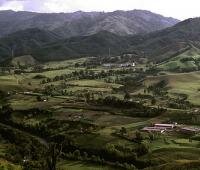
In Colombia, Rural Communities Face Uphill Battle for Land Rights
Issue:Competition over resources
“The only risk is wanting to stay,” beams a Colombian tourism ad, eager to forget decades of brutal internal conflict; however, the risk of violence remains for many rural communities, particularly as the traditional fight over drugs turns to other high-value goods: natural resource rights.
Article Source: New Security Beat
Image Source: Philip Bouchard
Read more »Posted on 15/11/11
Minority Youth Bulges and the Future of Intrastate Conflict
Issue:Marginalisation
The global distribution of intrastate conflicts is not what it used to be. During the latter half of the 20th century, the states with the most youthful populations - a median age of 25.0 years or less - were consistently the most at risk of being engaged in a civil war or in an internal conflict, where either ethnic or religious factors, or both, came into play (an ethnoreligious conflict). However, the tight relationship between demography and intrastate conflict has loosened over the past decade. Ethnoreligious conflicts have gradually, though noticeably, increased among a group of states with a median age greater than 25.0 years, including Thailand, Turkey, Sri Lanka, Indonesia, and Russia. The salient feature of these intrastate conflicts has been an armed struggle featuring a minority group that is age-structurally more youthful than the majority populace. The difference in age-structural maturity reflects a gap in fertility between the minority and majority, either in the present or in the recent past.
Article Source: The Stimson Center
Image Source: CharlesFred
Read more »Posted on 14/11/11
Safeguarding South Asia's Water Security
Issue:Competition over resources
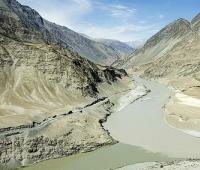
In today’s era of globalization, the line between critic and hypocrite is increasingly becoming blurred. Single out a problem in a region or country other than one’s own, and risk triggering an immediate, yet understandable, response: Why criticize the problem here, when you face the same one back home? Such a response is particularly justified in the context of water insecurity, a dilemma that afflicts scores of countries, including the author’s United States. However, in South Asia, the dilemma is considerably more urgent. The region houses a quarter of the world’s population, yet contains less than 5% of its annual renewable water resources.
Article Source: Seminar
Image Source: hceebee
Read more »Posted on 11/11/11

Governments Must Plan for Migration in Response to Climate Change, Researchers Say
Issue:Climate change
Governments around the world must be prepared for mass migrations caused by rising global temperatures or face the possibility of calamitous results, say University of Florida scientists on a research team reporting in the Oct. 28 edition of Science.
Image Source: Meredith James Johnstone
Read more »Posted on 1/11/11